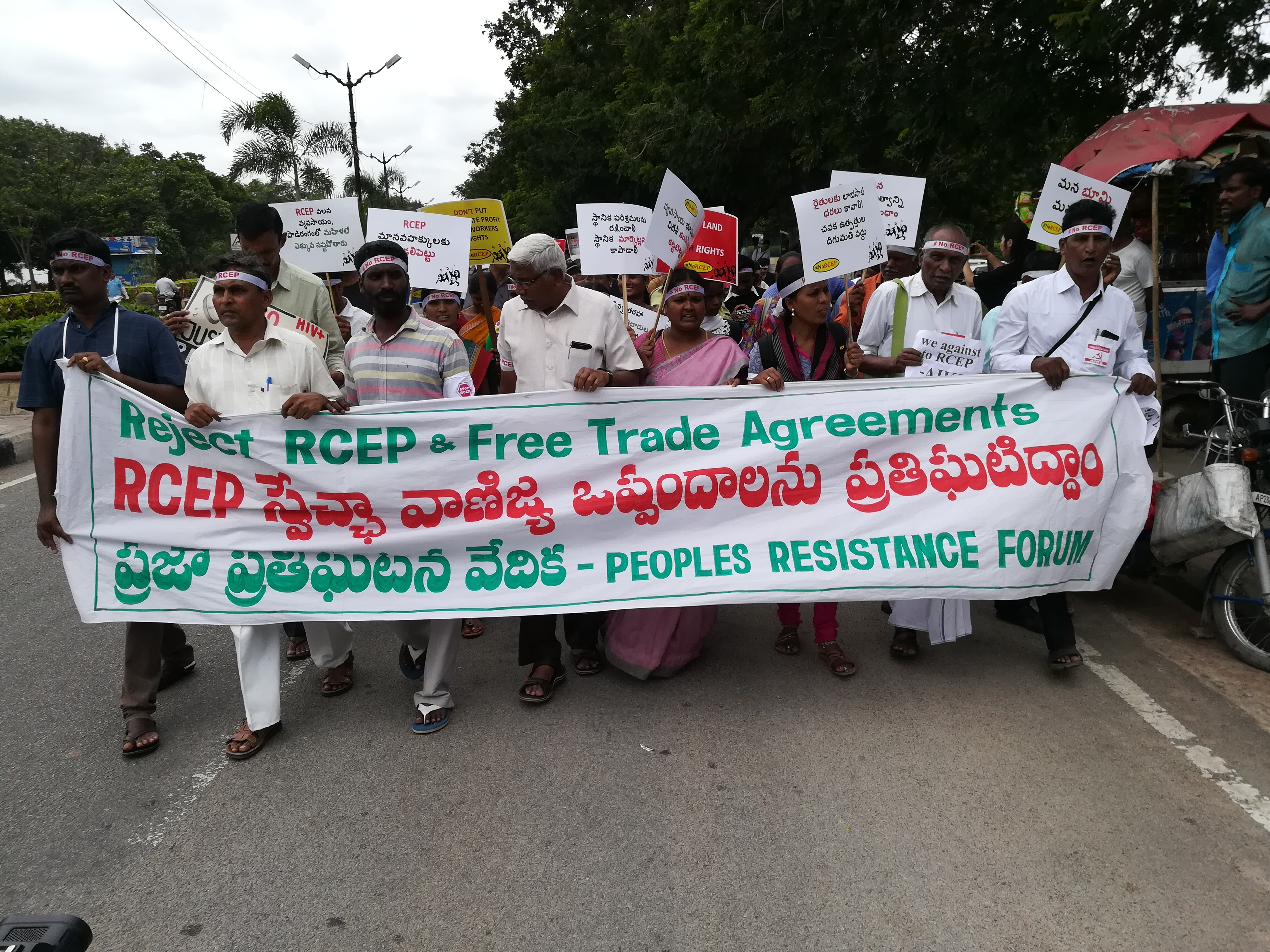
Since the early 2000s, there has been a significant shift in the free trade and investment landscape due to bilateral and regional agreements. While early regional integration patterns were established by foundational agreements, like the China-ASEAN Free Trade Agreement (2002), the South Asian Free Trade Agreement (SAFTA, 2004), the Korea-US FTA (2007), the Japan-ASEAN Economic Partnership Agreement (2008), the India-ASEAN FTA (2009) and the ASEAN-Australia-New Zealand Free Trade Agreement (AANZFTA, 2010), recent developments have greatly expanded the scope and impact of these frameworks.
The Regional Comprehensive Economic Partnership (RCEP) and the Comprehensive and Progressive Agreement for Trans-Pacific Partnership (CPTPP), implemented in 2022 and 2018 respectively, have created the world's two largest trading blocs, accounting for about 30% and 15% of global GDP. Not only these agreements have reduced tariffs and streamlined customs procedures, they have also established advanced frameworks for digital trade, intellectual property protection, and investment facilitation. However this expansion has generated substantial concerns among civil society organizations regarding democratic deficits, transparency, sovereignty erosion, and the prioritisation of corporate interests over public welfare. Civil society organisations (CSOs) across the region have consistently criticised these agreements for their potential negative impacts on developing countries. Experts raised concerns about implications of RCEP for food security, access to medicines, labour rights, and environmental protection.
China has been actively seeking bilateral trade and investment deals. It is a member of RCEP, has signed about 25 FTAs, with another dozen under negotiation. China is also a party to over a hundred bilateral investment treaties. These agreements are a key element of its Belt and Road Initiative (BRI), a global infrastructure project covering transport, the digital economy, energy and agriculture.
Bangladesh has emerged as a new player and has been rushing to sign trade deals in anticipation of graduating from least developed country (LDC) status. This has been criticised by CSOs that are concerned about the long-term implications for the lives and livelihoods of Bangladeshi people. Bangladesh is currently negotiating trade deals with around a dozen countries, including ASEAN states such as Thailand, Malaysia and Indonesia, the EU and the United Arab Emirates. The country is also seeking to join RCEP. In 2026, it signed trade deals with Japan and the US.
The European Union has intensified its FTAs in Asia including those with Vietnam, Japan, Singapore and Indonesia (expected to be implemented in 2027). There are also ongoing negotiations with Malaysia, the Philippines, and Thailand, focusing on digital trade, green technology, and sustainable development. In South Asia, the EU and India concluded negotiations on a comprehensive FTA in January 2026, targeting over 90% tariff elimination on goods and covering 96-99% of bilateral trade. For India, this also forms part of its strategy of redefining the map of global trade with nine trade deals having been signed since the COVID crisis. With Sri Lanka, the EU continues to trade under the Generalised Scheme of Preferences, which allows preferential access to the European market, contingent on adherence to human rights and environmental standards. Aside from the EU, several Asian countries signed FTA with the European Free Trade Association (EFTA) which comprises Iceland, Liechtenstein, Norway and Switzerland. These include India, Indonesia, Malaysia and Singapore, while negotiations are ongoing with Vietnam, and Thailand concluded talks in 2025.
The trade war between the US and China under Trump marked a shift towards aggressive economic policies. The US administration used tariffs – justified by national security and unfair practices – to pressure countries across the region. The US has used trade like of a typical neocolonical power, leveraging tariff threats to extract unilateral concessions and reshape national regulatory frameworks in favour of US interests and corporations. Indonesia, Malaysia, Bangladesh, Taiwan and Cambodia faced pressure to grant market access and sign “agreements on reciprocal trade”, triggering domestic backlash over sovereignty.
In the Pacific, Australia and New Zealand have been the most active in signing trade agreements. Both are members of the CPTPP and the RCEP, and have FTAs with China, the EU and India. They have also pushed for the Pacific Agreement on Closer Economic Relations Plus (PACER Plus) with Pacific island countries. However, this has been criticised by civil society groups and some governments for favouring the two countries. Papua New Guinea and Fiji have therefore refused to join. Pacific island countries have also negotiated an economic partnership agreement with the EU, but only Fiji, Papua New Guinea, Samoa and the Solomon Islands have implemented it.
Across the region, diverse social movements have developed sophisticated strategies to challenge free trade and investment agreements. These movements include peasant organisations, labour unions, indigenous groups, women's organisations, and environmental activists who have formed regional coalitions to share information, coordinate actions, and amplify their voices.
South Korea has officially signed its first free trade agreement under President Lee Jae-myung’s administration: the Strategic Economic Cooperation Agreement (SECA) with Ecuador.
Commerce and Industry Minister Piyush Goyal expressed optimism about finalizing a bilateral trade agreement with the US by November. Negotiations have been impacted by geopolitical factors, but progress continues.
India and the ASEAN (Association of Southeast Asian Nations) have come to an agreement to fast-track negotiations for a review of the trade pact between them in a bid to overcome uncertainties owing to steeper tariffs imposed by the United States on the South Asian nation, a government official said.
Thailand and the United Kingdom are pushing for the opening of negotiations on a bilateral free trade agreement (FTA) at all levels, along with pursuing joint efforts to explore channels to expand two-way trade and investment.
Hong Kong and Saudi Arabia are negotiating an investment promotion and protection agreement to strengthen investment, investor confidence and bilateral investment flows.
When the Trump administration arbitrarily imposed 15% tariffs on New Zealand exports on August 1, up from a previously announced 10%, no one should have been surprised.
Vietnam and Brazil have taken a significant step toward launching free trade agreement (FTA) negotiations, following a telephone conversation between Vietnam’s Minister of Industry and Trade, Nguyen Hong Dien, and Brazil’s Minister of Foreign Affairs, Mauro Vieira.
India and the EU are pursuing a two-stage approach to finalise an FTA, apart from a bilateral investment protection agreement and recognition of geographical indications (GIs) with the 27-member bloc.
Amid global trade uncertainties and a shifting geopolitical landscape, Taiwan has expressed a strong desire to sign a Free Trade Agreement (FTA) with India. The proposed pact is seen as a crucial step to deepen economic cooperation, boost bilateral trade, and create a powerful technology partnership, particularly in the high-value semiconductor sector.