

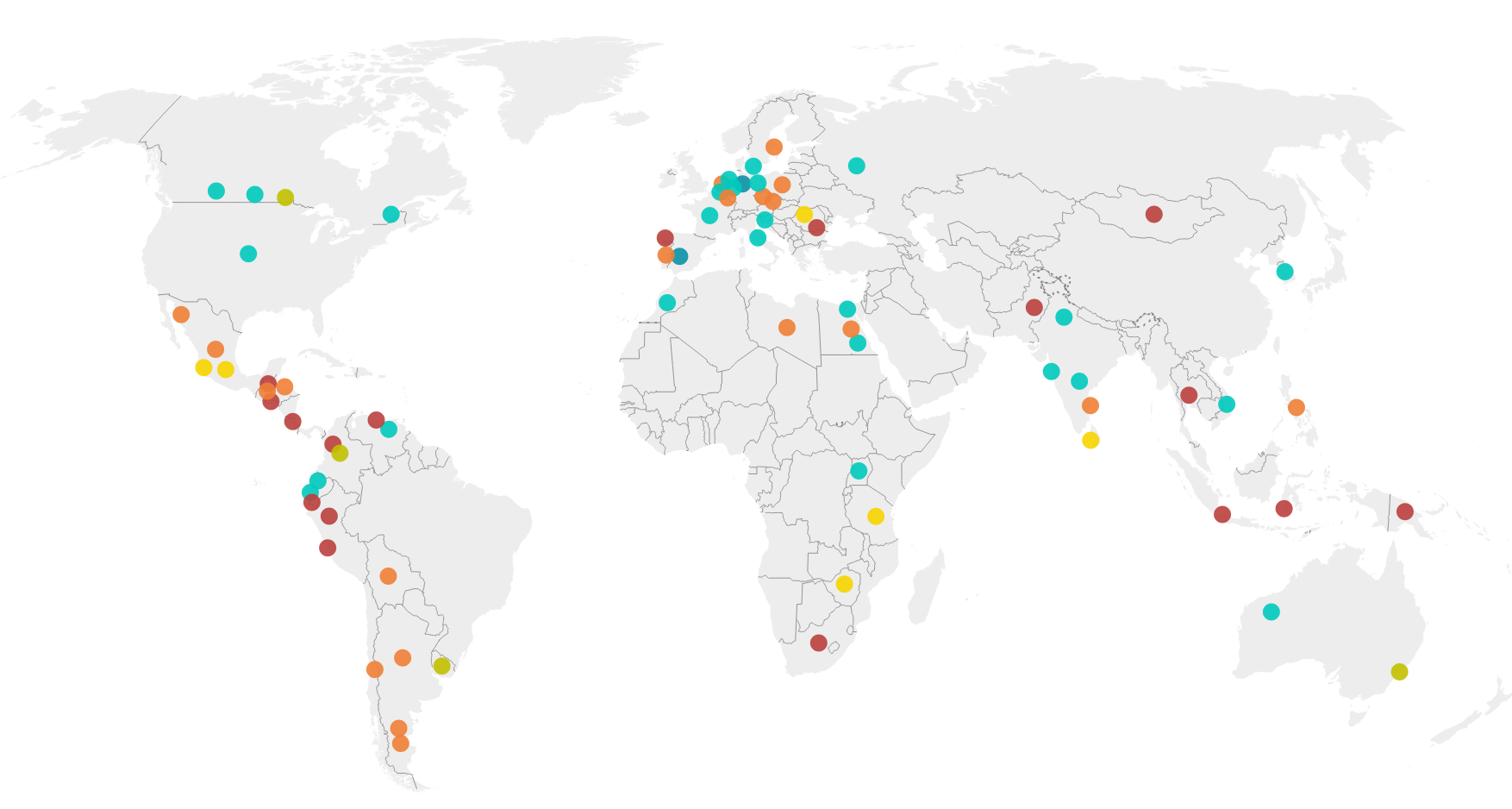
ISDS Case Map

The current conservative Coalition government has agreed to include Investor-State Dispute Settlement (ISDS) provisions in the Korea and China bilateral FTAs as well as the TPP. ISDS allows foreign companies to bypass national courts and sue governments for compensation if they can argue that a change in law or policy harms their investment. The previous Labor government had a policy against ISDS, and even a previous Coalition government did not include ISDS in the Australia-US free trade agreement in 2004.
There is widespread opposition in the Australian community to the inclusion of ISDS in the TPP. The TPP is also controversial because it extends monopoly rights on expensive life-saving biologic medicines, which will mean more years of very high prices before cheaper versions become available. There are also grave concerns about its impacts on food labelling standards and expanded access for temporary workers without additional protection of workers’ rights. A recent World Bank study found that Australia was only likely to gain almost no economic benefit from the deal.
Australia is currently involved in multilateral negotiations towards the PACER-plus agreement with New Zealand and 14 Pacific Island countries, the Regional Comprehensive Economic Partnership (RCEP) and the Trade In Services Agreement (TISA). It is also negotiating bilateral trade agreements with India and Indonesia and will begin talks with Hong Kong and Taiwan later this year and the EU next year.
Contributed by AFTINET
last update: May 2016
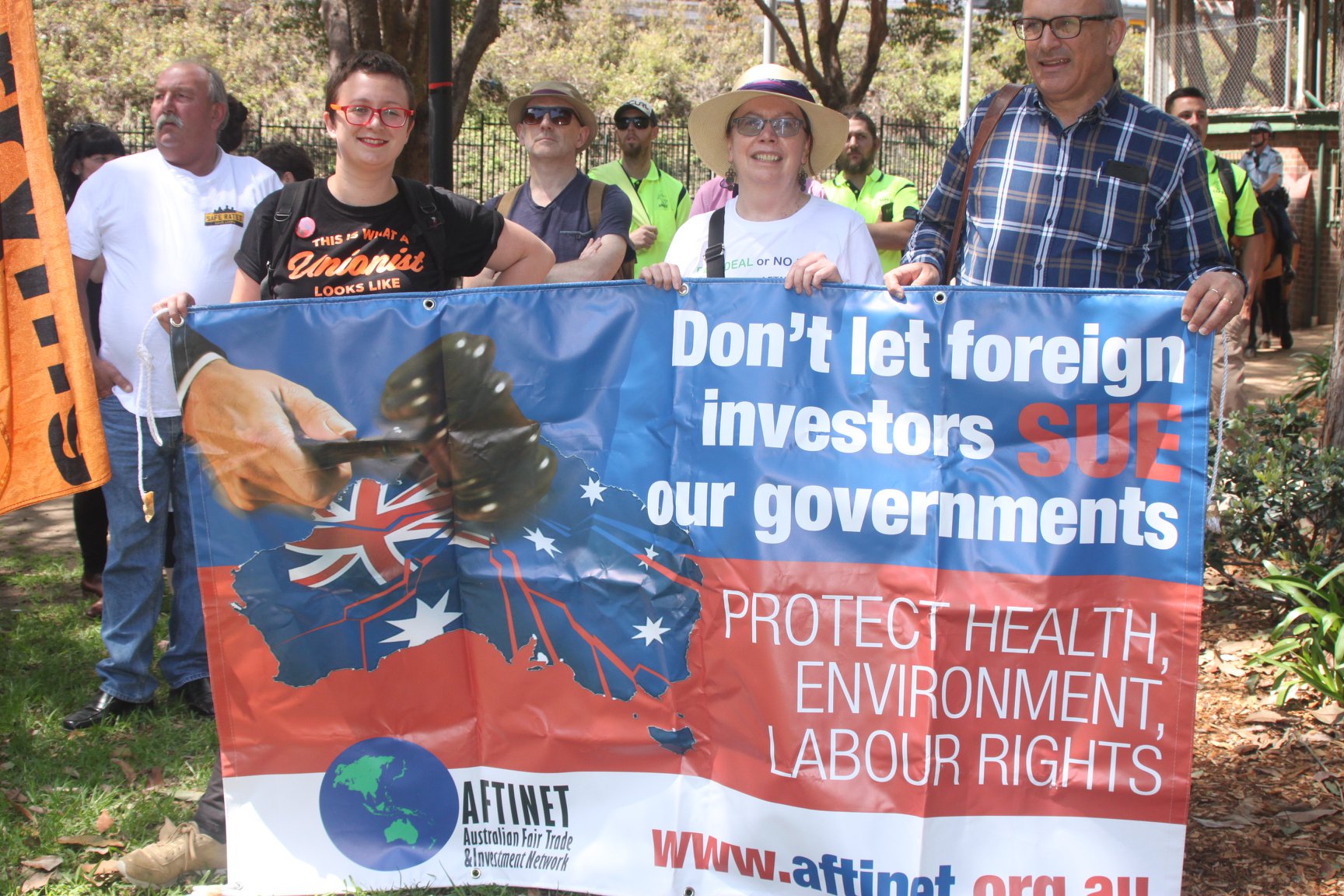
Photo: AFTINET